Living on the Mid North Coast comes with a lot of advantages — the lifestyle, the scenery, the climate. But that same environment puts fencing through its paces in ways that inland properties simply don't experience. Salt air, humidity, UV exposure and seasonal storms are a relentless combination, and they affect every material differently. The good news is that with the right fence for your site and a few straightforward habits, your fence can look great for decades. Here is what we recommend to every homeowner and business owner we work with along the coast.
Why coastal conditions are harder on fencing than you think
It is easy to underestimate what salt air actually does to a fence. Salt particles carried on the breeze settle on every exposed surface, including metal fixings, panel faces and gate hinges. If they are not rinsed away, they begin to attract moisture and accelerate corrosion. This process is slower than a direct splash of seawater, but it is constant and cumulative.
Add UV into the equation and you have a second force working on your fence simultaneously. The Mid North Coast sits in a high UV zone for most of the year, and prolonged sun exposure fades colour, dries out some materials and degrades certain coatings over time. Then there is the humidity, which keeps everything slightly damp even on days that feel dry, and the occasional coastal storm that tests fixings, gates and post footings in a matter of hours.
Understanding these forces helps explain why material choice matters so much, and why maintenance habits that might feel unnecessary in other parts of the country are genuinely useful here.
Choosing the right material from the start
The single most important decision you make for a low-maintenance coastal fence is the material. Not every product is rated for salt-air exposure, and some materials that look appealing in a showroom will show their limitations within a few years near the water.
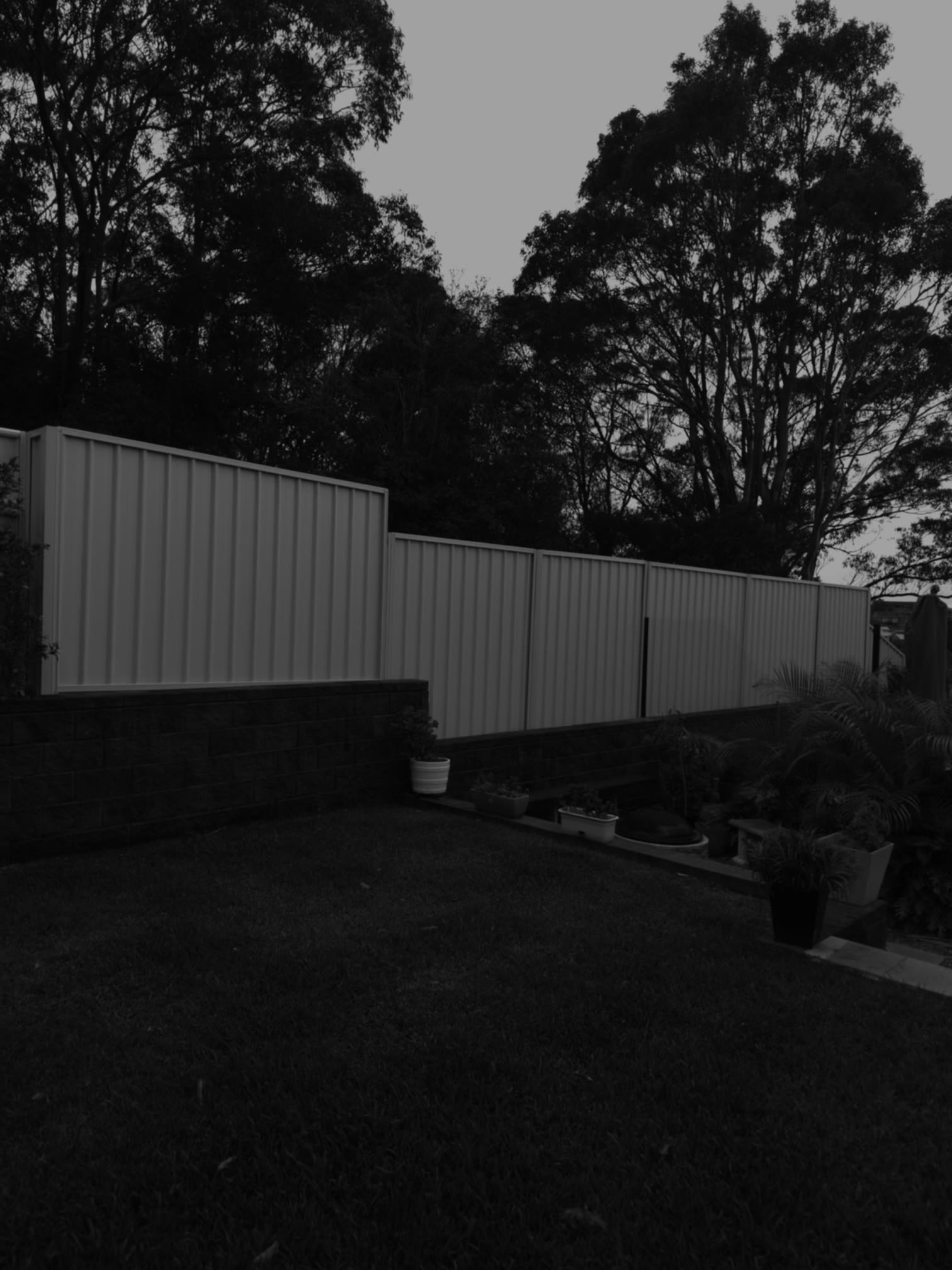
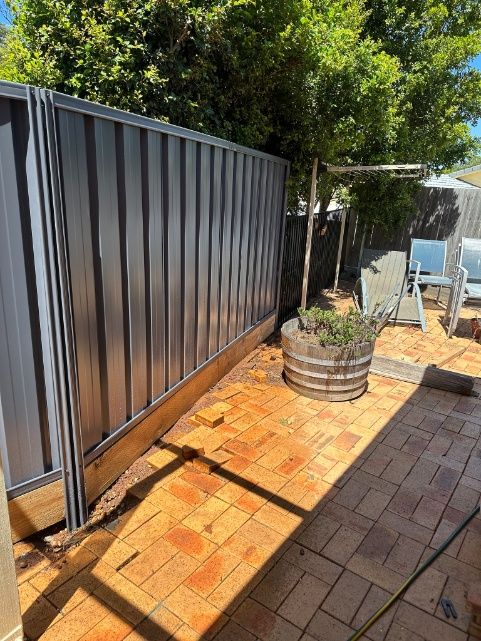
Our team most commonly recommends Colorbond steel for coastal properties because of how well it holds up in local conditions. It is manufactured with a multi-layer coating system specifically designed for Australian conditions, including coastal zones. The steel substrate is protected by a zinc and aluminium alloy coating, followed by a primer, a paint layer and a clear topcoat, with each layer adding another barrier between the steel and the salt air. Colorbond is not maintenance-free, but it is genuinely low-maintenance when treated correctly.
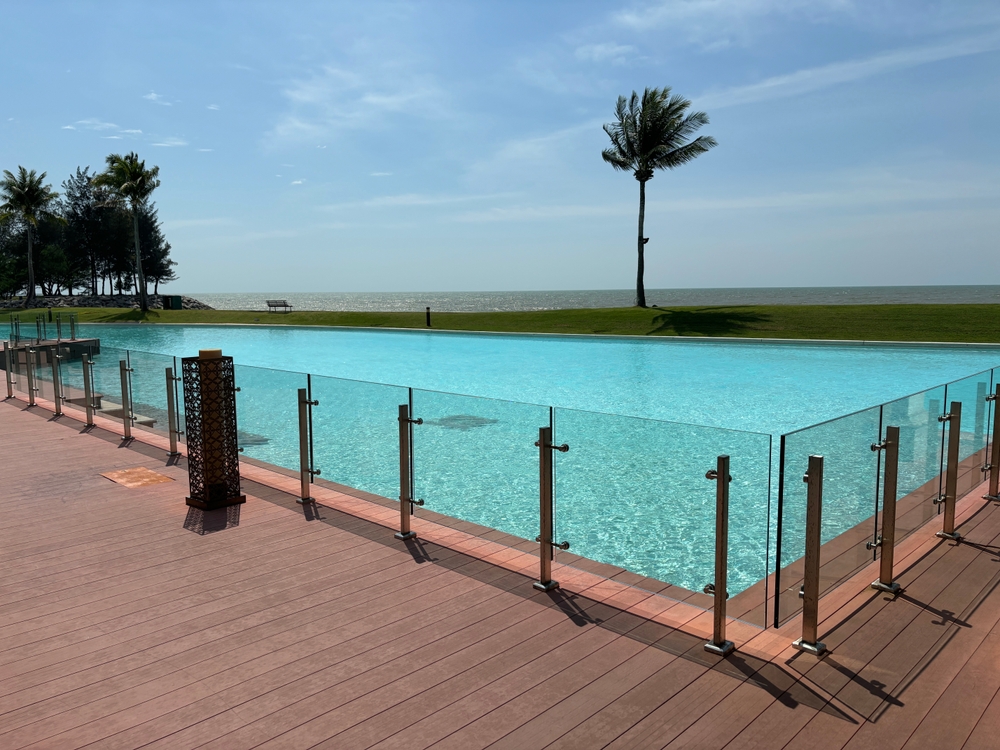
Aluminium is another strong option. It does not rust, which makes it well-suited to high-exposure sites. PVC performs well too, particularly in situations where moisture resistance is a priority. For any metal fixings such as hinges, latches, screws and brackets, we specify marine-grade hardware as standard on all coastal installs. The difference in longevity between standard and marine-grade hardware is significant, and it is not worth cutting corners on.
The simple maintenance habit that makes the biggest difference
If you do nothing else, rinse your fence. A light hose-down every couple of months is the single most effective maintenance task for any fence near the coast. It removes salt deposits before they have a chance to build up on surfaces and work their way into joints, fixings and panel edges.
You do not need any special products for this. Plain water from a garden hose is all it takes. Work from the top down, paying attention to the rails, any horizontal surfaces where salt tends to accumulate, and around gate hardware. It takes ten minutes and it makes a measurable difference to how your fence holds up over the years.
If you have not rinsed your fence in a while and you can see white or grey residue on the surface, a mild household detergent and a soft brush will lift it without damaging the coating. Avoid abrasive cleaners, steel wool or anything that scratches the surface. Once the protective coating is compromised, the underlying material is exposed.
Keep vegetation away from the fence line
This is an easy one to overlook, but it genuinely matters. Climbing plants, hedges that sit hard against the fence and garden beds that press up to the base all trap moisture and reduce airflow along the fence line. In a coastal climate where humidity is already elevated, that trapped moisture accelerates wear and gives corrosion a foothold.
Keep a small gap between any garden beds and the fence base. Trim back plants that are touching or climbing the fence. If you have irrigation running near the fence line, angle it away from the panels and fixings where possible. These are minor adjustments that significantly reduce the rate of wear on the fence over time.
Checking your fence: what to look for each year
A quick annual inspection takes very little time and catches small problems before they become expensive ones. Walk the fence line and look for surface marks and scratches, since small scratches in a Colorbond surface can be touched up with matched paint if caught early, but left untreated even a minor scratch can become a rust point.
Check for corrosion around fixings. Gate hinges, screws and brackets are often the first place corrosion appears, so look for orange staining or white powdery deposits around any metal hardware. Pay attention to gate alignment too. A gate that has started to drop, drag or sit unevenly is usually telling you that a hinge is worn or a post has moved slightly. It is an easy fix if addressed early and a more involved job if left.
Check that posts are still sitting firm in the ground, particularly after any significant storms, because movement at the base affects the whole fence line. On Colorbond fences, the cut ends of panels are sealed during manufacture, but it is worth checking that none have been damaged or exposed.
When to call a professional
Most routine maintenance on a coastal fence is well within the scope of a confident homeowner. Rinsing, lubricating hinges, touching up small scratches and trimming back vegetation are all straightforward tasks.
There are situations, though, where it is worth calling in a professional. If you notice a post that is no longer sitting plumb, significant surface corrosion that has progressed through the coating, or a gate that is no longer latching or aligning properly despite basic adjustment, these are signs that something structural may need attention.
Addressing these issues early is almost always cheaper and faster than waiting until the problem has progressed. Our team has been working on fences along the Mid North Coast since 2007, and the jobs that cost the least to fix are almost always the ones that were caught early.
If anything on your fence is giving you concern, or if you are thinking about replacing an ageing fence before the next storm season, we are happy to take a look. Get in touch for a free, no-obligation conversation about what your property needs.